Episode 170 · Nov 10, 2026 · 27 min
Building a Boutique at Scale with Leah Sciabarrasi

About this episode
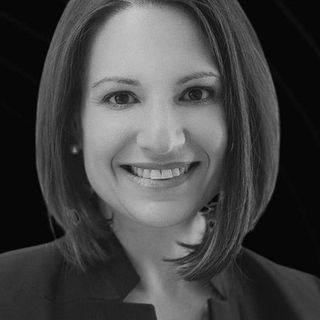
This week, Kyle Van Pelt talks with Leah Sciabarrasi, President and Managing Partner at Crestwood Advisors. Leah joined Crestwood in 2003 when the firm was just three people with no assets under management, giving her the unusual opportunity to help build the business from the ground up. Over more than two decades, she has grown from hands-on operator into a leader guiding the firm’s strategy and growth.
Kyle and Leah explore what changes when an advisory practice becomes an enterprise and how Crestwood has worked to preserve a boutique client experience as it has grown. Leah shares why the firm invests in people and infrastructure before capacity becomes strained, how culture and mutual adaptability shape successful mergers, and why long-term strategy sometimes requires spending ahead of revenue. They also discuss using technology and AI to improve efficiency while keeping judgment, context, and human relationships at the center of advice.
In this episode:
(00:00) - Intro
(01:08) - Leah’s money moment
(04:15) - From operator to firm leader
(06:03) - The shift from practice to enterprise
(08:30) - What it means to be a boutique at scale
(09:35) - Balancing technology, talent, and the personal touch
(12:02) - Why mergers are about people, not systems
(17:31) - Investing ahead of growth
(18:53) - Where AI fits in holistic advice
(20:11) - Evaluating new tools by the problem they solve
(21:48) - Leah’s outlook on the future of the wealth management industry
(23:55) - Leah’s Milemarker Minute
Key Takeaways
Invest ahead of growth. Waiting until capacity is strained forces leaders into reactive decisions. Building people, infrastructure, technology, and specialized expertise before they are urgently needed creates room to grow without constantly fighting fires.
Know whether you’re building a practice or an enterprise. Scale introduces a different level of complexity around people, systems, culture, career paths, and decision-making. Those elements need to become more intentional as a firm grows.
Make scale invisible to the client. Growth should give clients access to greater resources without making their experience feel more complicated or impersonal. Team-based service, thoughtful technology, and consistent standards can preserve a boutique experience inside a much larger organization.
Treat merger integration as a people and culture challenge first. Combining firms requires respect for what each organization already does well. Strong integration comes from shared client priorities, willingness to learn from both sides, and clarity about what must become consistent versus what can evolve.
Quotes
“One thing I’ve learned about successful growth is that growth works best when you invest ahead of it.” ~ Leah Sciabarrasi
“I think our willingness to choose long-term strategy has been the biggest driver of our growth.” ~ Leah Sciabarrasi
“At some point along the journey, I think you have to make a conscious decision about whether you’re building a practice or building an enterprise, because those are very different things.” ~ Leah Sciabarrasi
Links
Connect with our hosts
Subscribe and stay in touch
Produce game-changing content with Milemarker Studio
Milemarker Studio helps your company grow by producing top-quality content and fostering transformative conversations. We specialize in content generation, podcasting, digital strategy, and audience growth for fintech and financial services companies. Learn more at MilemarkerStudio.co.
Transcript
Machine transcript. Click any line to jump the video there.
It's easy to underestimate the complexity of mergers. You're bringing together teams that have already built something successful. So, you have to start from a place of respect for that. We want to understand what does this team do really well and what we can learn from them and how can we bring the best of both organizations together to build something stronger. Hey everybody, welcome back to another episode of Next Mile. I'm your host Kyle Van Pelt, co-founder at Milemarker and today I am joined by Leah Sciabarrasi.
Leah is the managing partner and president at Crestwood Advisors and she is a mom of three boys and an active traveler. If she is not found running Crestwood Advisors, which is a full-time job in and of itself, she is somewhere at a soccer field or somewhere else continuing to run the ship that way. Leah, thanks so much for joining Next Mile. Kyle, thank you for having me. Of course, we are happy to have you. All right, Leah, we ask every guest of Next Mile the same first question, and you are not going to get away from the same first question as everybody else. I've had over 200 of these conversations, and I have found everybody has their own unique path to this industry. Some people's path is traditional, some people's path is very untraditional.
They didn't even know this was an industry they could work in. But what we found is whether your path is traditional or untraditional, everybody has what we call a money moment. And that's that moment in your life where the light bulb kind of clicked on and you decided this is it. This is what I want to do for my career. So Leah, what was that money moment that led you to sitting in that chair having this conversation with me today? Well, I joined Crestwood in 2003 when it was just three of us and there were zero dollars in assets. I was pretty young at the time and two managing directors that I worked with invited me to join them in starting a firm. So, I had this unusual opportunity very early in my career to help build something from the ground up and then to grow up professionally alongside it. And I realized pretty quickly that the business is really not about numbers. That families let you into their lives in this intimate way and you help them make decisions through some of the most important and complex moments in their lives. I do remember very early on in the business standing by a grave site at a client's funeral in the early years and sort of witnessing that family's grief and knowing that we were the partner they would rely on and feeling the weight of that profound responsibility. The work that we do is deeply personal and deeply meaningful for families. And the guiding idea from day one at building Crestwood was about building a firm that we trust for stewardship of our own families. And I think that's what ultimately excited me about Crestwood. It was the chance to build something with people who shared that same vision and focused on long-term relationships and comprehensive advice. And being able to shape that from the early days was incredibly exciting. So that same vision is what's carried us to where we are today as an independent fee only fiduciary firm serving individuals and families and we still hold ourselves to that same standard that we started with.
Oh, I love that. What a great money moment and what a powerful one. I really love the imagery and the vivid picture you painted of standing at the grave site there and kind of realizing that this is a different profession than others. It really does kind of cross lines in lives, right? Yeah. And I hope it really is that memory of core responsibility. I guess we obviously share wonderful joyful moments with families as well. But sure, these are the important moments, right? And this is what the work that we do before and after all of these milestones in life is why it's so important. Yeah. Well, not to harp on it too much, I live in Atlanta, Georgia. Air conditioning is incredibly important, but I don't think people invite their HVAC people to moments like that in their lives, right? So what a noble profession and what a great moment of people understanding how important the work is that this industry does.
So Leah, as you stated, you started at Crestwood really in the early days and you helped build this thing up from the ground and I think it's been quite some time that you guys have built this business and it's amazing to see what you guys have done. But you were there from the beginning and not only has the firm grown but you've really grown from working in the business really being an operator and somebody who is making things happen to now the leader of the business. Can you talk to us about the journey of growing from individual contributor to now leader of the business? Yes, absolutely. So my role has certainly changed over time as you highlighted and yes I started out very integrated in the day-to-day business and working directly with clients and in very specific other facets of the firm and over time my focus shifted from doing that work myself to building that environment where others can make great work happen. So, one thing I've learned about successful growth is that growth works best when you invest ahead of it.
As we've grown, we've invested in more infrastructure, technology, specialized expertise, and most importantly, great people before we needed those resources. And we do this because we want to limit the need to fight fires as growth outstrips our systems and our current resources. And when we pull it off the right way, we as leaders can spend more time thinking about strategy and whether we have the right team and the structure in place. So it's a pillar that we really believe in, which is that growth really works best when you invest ahead of it. And there are a lot of accidental business owners in our industry who start out loving the client work and suddenly find themselves running a more complex firm. But I've really enjoyed that evolution.
I love that. So let's talk about that evolution a little bit more going from zero to over$8 billion in assets under management with proper departments and multiple locations etc. I know that's not how it started. One of your personal facts is that you have three boys. I have four kids myself. And in some ways I think about building a business a little bit like parenting. You don't have to have all of the answers when they're first born, right? You don't have to worry about the teenage problems when they are 2 months old. And I think you're kind of prepared for each stage and each moment as it comes and you have to face all of it, but it's always new. Talk a little bit about the experience of going from that small scrappy firm to a place that can build great work. What were some of the challenges of setting up departments, getting multiple offices, getting processes that scaled, and how you face it whenever the thing that is working right now starts breaking and no longer works.
Right. It's a good analogy that you make. Today, as you mentioned, we're more than 8 billion in assets. And at some point along the journey, I think you have to make a conscious decision about whether you're building a practice or building an enterprise because those are very different things. And there's value in keeping a practice simple. But if you decide to build an enterprise, you are taking on a different level of complexity because you have to think about people and systems and culture and decision-m and how all of those things scale together. So let me give you an example. When you're a practice, it is easy to bring talented performers along and feel sort of feed them responsibility, right? To the most talented people that are on your team.
When you get bigger, you need to be explicit about career pathing, how people can advance and grow within the organization. Top performers want to know, and you don't want to accidentally overlook them and lose people. So, the challenge is building that infrastructure without losing the qualities that made you so successful when you were smaller. And the real test is whether a client feels that scale. We certainly strive to ensure that they don't. One way we do that is that clients are served by a team. So no client is ever dependent on one person as we grow. I've worked with some of the same clients for over 20 years and they're still surprised if they see us pass a new milestone like the 8 billion AUM mark because for them the day-to-day experience hasn't changed even as the firm has grown.
That's awesome. And I think that fits one of the themes that you try to run the firm off of or the way that you identify yourself. I read it somewhere or something but you guys have this theme of a boutique at scale which I think is really unique. Can you talk a little bit about how that was developed over time? Yes. I think candidly the firms that succeed from here will be the ones that can combine real scale with a genuinely boutique experience where the client benefits from the growth but doesn't feel that complexity behind it. The landscape has changed tremendously over the past couple of decades and scaling is the only way to serve clients in a costefficient way. The resources required to serve increasingly complex families have changed and they're going to continue to change. Client expectations are going to continue to change. Technology is going to continue to change and regulations. All of those things are always evolving. And so we've significantly expanded how we serve clients over the last 10 years. And I expect that we'll continue evolving that over the next 10 years. Who can scale that without losing that personalized boutique experience with clients? I think that that's the key. So when I often talk to people, I think there's this seessaw of how many people and headcount do we need to have to continue to make it feel like that boutique experience versus how much we invest in technology. And that feels like that's always sort of intention intention to create the scale that you want while still providing that white glove experience. How do you think about that tension and that seesaw of headcount growth versus automation at scale without losing that personal touch? I think that technology is obviously incredibly important in the background to making workflows and processes efficient and to being able to efficiently create deliverables, right?
That's really important. But none of that can be automatic. It won't feel right. It won't know the important things that are relevant to building that deliverable for a client. So making sure that you have you're calling it the headcount, the talented people in place in the right roles with the right expertise to utilize that technology and really create the deliverable that feels relevant for the client I think is the trick. And I'm not sure that there's a rigid formula for that, but I think it comes down to being able to assess capacity by role and being able to ensure you have a pipeline of talent and being able to retain that talent and being mindful of sort of the evolving technologies. It's easy also to chase down every new thing. It's such rapid fire right now. So making sure that you have a mindfulness around the problems you're striving to solve when you implement technologies so that you're not distracted by every new idea is also important.
Yeah, that's a great point. The shiny object syndrome can become very challenging, right? And then you spend so much time trying to get that scale and automation. A lot of our clients and prospects have heard me say many a times, the grass is green where you water it, right? There's so many great pieces of technology in our industry and our space, but if you're frustrated about one aspect of it and you're going to move to something new, I guarantee you there will be something about that other thing that you're frustrated about too, you could always be discontent and want a new house or a new home or something like that. But the grass is green where you water it and where you cultivate it as opposed to chasing that shiny object syndrome. And so I love that. I think that's a great perspective to have. One of the things that has made you incredibly successful over the past couple of years is three successful mergers or firms that you've integrated into Crestwood. That's no easy feat.
We've talked to several people here on Next Mile about the challenges of integrating firms via merger or acquisition. Would love to hear about how you navigated the complexity of three mergers and have come out on the other side with your culture intact and still continuing to be boutique at scale. Sure. It's easy to underestimate the complexity of mergers and usually people think that it's the systems and that's what's so difficult, but it really isn't, right? It's the integration of people and cultures and you're bringing together teams that have already built something successful. So, you have to start from a place of respect for that. We have 20 plus years of history at Crestwood, but certainly that does not give us the monopoly on great ideas. We want to understand what does this team do really well and what we can learn from them and how can we bring the best of both organizations together to build something stronger and that's why alignment around culture and philosophy has to come first. You build trust in small ways. You have to listen. You look for nuggets of wisdom from the other team that might make your own processes better. and you demonstrate that you respect the relationships and the ways of working that that team may have built over decades. There's inevitably going to be differences in the how. We may have different views about a process, a workflow, or even how something should be delivered to a client. But if everyone is genuinely starting from the same place, and that is what is best for the client, you almost always have common ground from which to work towards a resolution. So adaptability has to go both ways. We have to be willing to change when another team has a better idea. And at the same time, a process that has worked beautifully in a smaller firm may not work that exact same way in a larger organization with more people, more specialization, multiple locations.
Some of the structure and the process that comes with scale can feel cumbersome and it can feel repetitive, particularly to someone who has been accustomed to doing things more independently. So the goal isn't to say this is how we do it, so this is how you need to do it. It's to be thoughtful about what needs to be consistent because we're one firm while remaining open to what can evolve because we're better for bringing two teams together and it's ongoing work. You know, it's funny to think about like the completion of mergers. I mean, there's ongoing work always, but that's what success, I think, ultimately looks like, right? is honoring the legacy, preserving what made each organization successful that both organizations are altered, right, by coming together.
Yeah, that's a great point. I mean, I have to imagine that's such a challenge because people obviously have the things that have really worked for them, but often times when you've been at this and you've had so much success, it's got to be hard to flex a little bit when you're like, we've really got this figured out. Just come to our way of seeing the world. We've got so much proven process here and a way of thinking about this and looking at this. So I really respect how difficult that can be and like you said I think it is often viewed as integrating firms and businesses when in reality it's so much people and philosophies and culture. Yes, that's awesome. This podcast is brought to you by Turncast. We make gamechanging content for fintech and financial services companies. Learn more at turncast.com.
Hey Next Mile listeners, Jessica here from Milemarker. You know, we talk a lot about reaching that Next Mile in your business journey, but let's be for real for just a sec. If you're an adviser, how much time are you spending wrestling with data instead of actually advising your clients? I've worked firsthand with tons of adviserss over the years, helping them achieve real success and breakthrough growth. But I keep seeing the same roadblock everywhere. brilliant advisers stuck spending hours pulling reports from their different systems, trying to create meaningful client presentations, and struggling to get a clear picture of their firm's growth. Does this sound familiar? Here's what I've learned. The advisers who are scaling and growing aren't necessarily smarter. They've just figured out how to get control over their data. That's exactly why I joined Milearker, because they've built a solution that changes everything for how you manage and grow your firm. At Milemarker, we specialize in three game-changing areas for firms like yours. Streamlining your data management so all your systems talk to each other. Automating those repetitive reporting tasks that eat up your valuable time and creating seamless advisor and client experiences that actually help you grow your firm.
The difference is night and day. Instead of spending your evenings pulling together client reports, imagine having that data automatically organized and presented exactly how you need it. Instead of guessing about your firm's performance, imagine having real-time insights that help you make strategic decisions. If you are ready to stop being held back by your data and start using it to fuel your growth, I'd love to have a conversation with you. We're offering Next Mile listeners a complimentary consultation to explore exactly how we can help you transform your advisory practice. Don't let outdated processes keep you from reaching that Next Mile in your firm's growth. Visit milemarker.co. I mentioned the Next Mile podcast and I'll personally make sure to get the insights you need to take control of your data and scale your practice because your time should be spent building your business not buried in spreadsheets.
One of the things that has been able to make you very successful is making financial investments before the revenue is realized or before it shows up. So kind of investing ahead of the growth that's coming and things that are you see happening. What gives you the courage to make those bets when you look at the business? And talk to us a little bit about how you evaluate when you're going to invest ahead of the growth of the business versus when you're going to invest in the business as it is right now and trying to shore it up. Yeah. I mean, one of the best early examples of this was really just committing to the comprehensive advice driven model that we've been employing since 2003. It sounds obvious now but at the time the industry was very transactional and at the start we had no clients to propose this too. So [clears throat] building a holistic engagement meant investing in people time and infrastructure well before we saw the return on that and stretching ahead of revenue. It does take conviction like you mentioned and we've made mistakes, but the theme that we come back to is that choice between short-term growth and long-term strategy. And in hindsight, I think our willingness to choose long-term strategy has been the biggest driver of our growth. I absolutely love that. That's awesome. It wouldn't be a podcast conversation and we wouldn't be able to do this if we didn't talk about AI. Maybe not even a podcast conversation.
It feels like every conversation around the industry right now is talking about it. So how do you think about investing in AI as the concept that we just talked about doing that before the revenue is realized doing that before things become crystallized and solidified? How do you make those decisions with imperfect information? Yeah, I mean we were talking about technology just a moment ago, right? And our clients lives keep getting more complex and their expectations continue to change. tax, estate, investments, family dynamics, liquidity events, intergenerational planning. It's sort of the baseline now for any holistic engagement. AI is starting to play a role in that. Mostly supporting behind the scenes right now, built into software that firms can use and things like that. It helps us move faster. It helps us analyze information more efficiently. But the core of what we do, the judgment, the empathy, like the understanding of context, it's still very human. So for now, AI will make good advisors more efficient, but I don't believe it will replace the advice that we're bringing to clients in that way.
I think that's awesome. How are you thinking about the tooling itself? Are you relying on the current partners that you have to bring you AI? Are you using the big AI partners that are out there? Like how are you guys evaluating all of that without, as we talked about earlier, succumbing to shiny new object syndrome, which my goodness, you could spend the next four months looking at only AI related tools and all of the new ones that pop up and probably have still not even scratched the surface. Right. Well, it is a mix of internal professionals who are focused on tech as well as outside partners who have expertise in this area. And from an internal perspective, we're seeking to establish the pathway towards integration of new systems or processes.
Right? So again coming back to that what is the problem that we're trying to solve when we're integrating a new system and then how can we optimize it because we've all had the experience of being introduced to a demo of a new system and it it looks so magical and then you integrate it into the business and it leaves something to be desired and maybe it's not optimized or used to its best abilities. Again I'll come back to the client experience. If we believe that something will meaningfully improve the client experience let's move on that. Let's make good decisions. again with internal talented professionals focused on tech as well as potentially outside partners that have an expertise in this area and can help provide guidance. And of course, we're mindful of making sure that we're thinking through all of the security and compliance issues inherent in those decisions.
Yeah. So, Leah, this is a chance where I love to ask my guests to get out their crystal ball. And I used to ask people to look five years in the future, but the world is compressing so quickly and timelines are moving so fast now that I kind of move this into half the time, but look two maybe three years into the future and tell me what it is that you think is going to happen in the industry and then what you're preparing Crestwood for as those predictions potentially come true. Right. Certainly, I think there will continue to be ongoing consolidation within our industry. I think that as we talked about a little bit earlier in this podcast, scale is really the key to ensuring that you can serve clients more completely. It takes a lot of investment in resources in the business to meet the needs and a willingness to change, a willingness to evolve, which is one of the things I'm most proud of about Crestwood is that we have always been thinking about how we can do things better, more comprehensively.
We are not afraid to recalibrate if we think something's not working. [snorts] And I think broadly the firms that are able to be nimble that are making investments in their organizations are going to be the ones that come out more successfully. Certainly those are the things we are thinking about to position us so that we can ensure we're meeting clients needs today, a year from now and etc. And how you keep doing that while keeping the client experience authentic and real is also very much part of the work that we're doing internally. When you're smaller, I think that people can grasp the culture of serving clients in an easier way because you don't need to necessarily explicitly say everything because you're observing it and you're a part of that team on an ongoing basis.
When you grow the firm, it becomes really important to create discipline around the approach to those things. You don't want to take away the personalization, but you want to give people the right framework and the right tools so that there is a consistent experience for each and every client. I love that. All right, Leah, we are going to move into the final segment of the show, which is what we call the milemarker minute. It's a series of lightning round questions aimed to get to know you a little bit better outside of the work you do at Crestwood Advisors. Are you ready for the mile marker minute? Okay, let's go. Okay. If you could travel anywhere in the world that you've never been to before, where would you go? Antarctica. Oh, wow. Okay. Got to go see those penguins in the pink ice. Are you a beach person or a mountains person? Beach.
Okay. What is the best road trip you've ever been on? Best road trip would be the east coast of Australia. Many years ago. I'd love to do that again. Okay. What is active traveling? Well, it is hiking and biking and experiencing destinations through a variety of different activities. And with three boys on vacation, it's important to get those energies out and have those experiences. So, I've really embraced it. I love it. What is the best flavor of ice cream? I would say maybe we go with gelato and say no. Okay. I love it. Can you get great no chola gelato in the north end of Boston?
You probably can. I have to tell you I'm not a huge dessert person, but if I was going to splurge on that, I might go for that. I love it. What's the best book you've read or listened to in the past 12 months? Being mortal by a Tul Gand. Excellent. So, the name of our company is Milemarker. And mile markers are a symbol of progress along a journey. And we believe that the journey never stops. So, with that being said, I'd love for you to complete this phrase for me. Progress equals blank. Progress equals action over perfection. I love that answer. Okay, final question for you. There is an alternate universe. And in this alternate universe, Leah has a job that has nothing to do with financial services, RAIA, or anything that has to do with Crestwood Advisors.
In this alternate universe, what is your career? I would say maybe travel agent. Excellent. I love that answer. All right, Leah, it was such a fun conversation with you today. I think it was packed with insights about what it takes to build a business from that scrappy small firm with a lot of dreams and a lot of hopes. And I'm sure you still have plenty more. But to go from where you were to over 8 billion in assets is an incredible story. And for your journey to happen along that whole process, too. you've had such a neat opportunity to sit in the perspective that you have watching Crestwood become what it's become and then you're going to get to continue to see what it's going to become. So, thanks for sharing all of that wisdom and insight with the Next Mile audience today.
Well, thank you, Kyle. I really appreciate it. It was a super fun conversation and it was fun to share about Crestwood. Thank you so much. Of course. Thank you. All right, everybody. That has been another episode of Next Mile. Please make sure you click follow or subscribe wherever you're paying attention to this. And if you'd be so kind, leave us a review so the people who've never heard of this show before can find great conversations like the one I just had with Leah. But until the next episode, enjoy every mile.
Keep listening

Beyond Referrals: Transforming Advisor Growth with Eden Ovadia
Eden Ovadia, FINNY

The Future of RIAs: Organic Growth, AI, and Advisor Culture with Michael Batnick
Michael Batnick, Ritholtz Wealth Management

Building a Firm That Lasts: Trust, Culture, and Communication with Richard Alt
Richard Alt, Carnegie Investment Counsel