What Even Are Percentages? Why Wealthtech Needs to Care About Financial Literacy
U.S. adults answer only 49% of financial literacy questions correctly. Jud Mackrill explains why wealthtech firms must treat clarity as a competitive advantage.

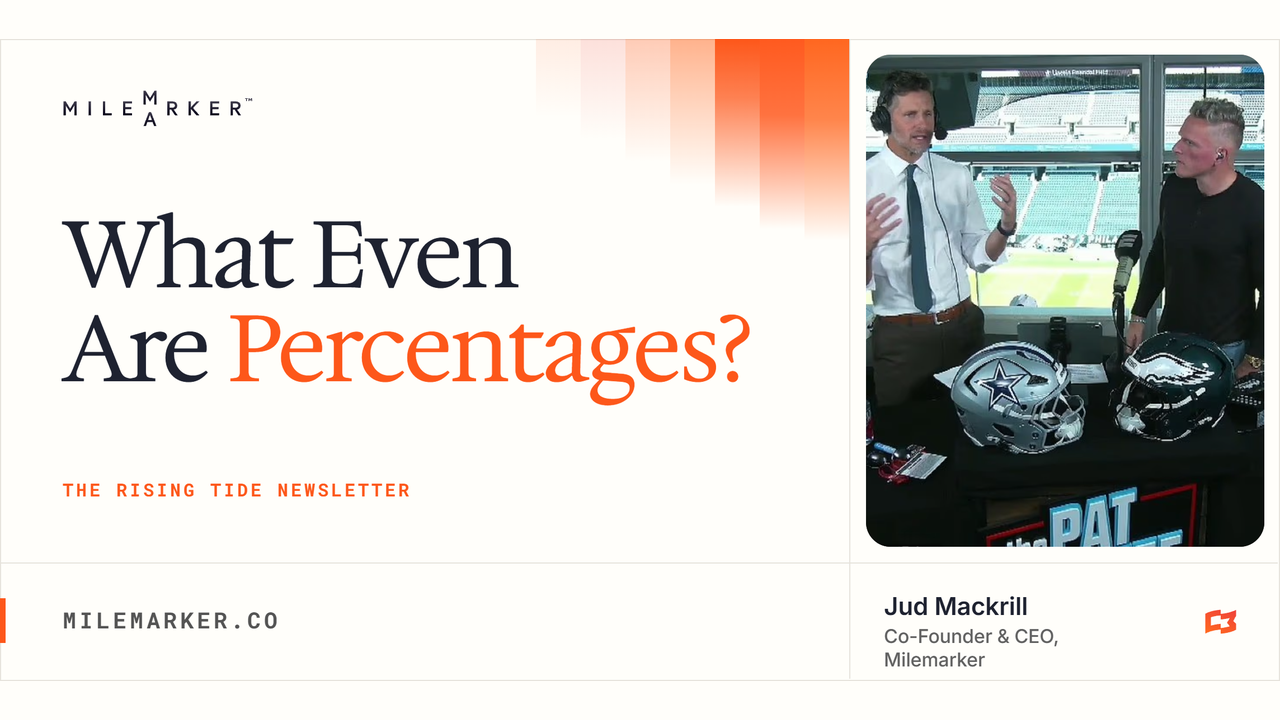
Earlier this week a clip from The Pat McAfee Show made the rounds. A commentator paused mid-conversation and sincerely asked what percentages are.
The room laughed. The internet laughed. I laughed too.
Then I stopped laughing, because I realized how many of our clients are asking similar questions. They just rarely say it out loud.
The assumption problem
In wealth management, we build almost everything on an assumption: that the person across the table understands the language we speak.
We present reports full of technical metrics, and clients usually nod and move on. That nod is doing a lot of heavy lifting.
According to the TIAA Institute and GFLEC Personal Finance Index, U.S. adults answered only 49% of basic financial literacy questions correctly in 2025 — roughly flat since 2017. Only about a third could answer all three “Big Three” questions correctly, covering compound interest, inflation, and diversification.
Compound interest is the engine of everything we do. If a client doesn’t understand percentages, they can’t truly understand growth, risk, fees, or returns.
They’re trusting us on faith.
Wealth and understanding are two different things
Having wealth and understanding wealth are separate skills.
Surgeons, founders, and heirs can manage large balance sheets while having only a loose grasp of what drives them. Success in one domain doesn’t transfer to fluency in another. And success can make people less willing to admit confusion in a new area.
So they nod.
The authority trap
Our industry has a habit. We explain things in the most sophisticated way possible, because sophistication signals competence.
It creates distance. It makes people feel like the problem is them.
And people who feel like the problem is them don’t ask questions, don’t engage, and eventually don’t stay.
Clients don’t fire you for being too clear.
A second kind of tiering
Advisory firms usually tier clients by how valuable they are to the firm. Those tiers almost always measure one thing: how valuable the client is to the firm.
I’d suggest measuring a second factor: how confident each client is in understanding their own finances.
Ask clients directly and without judgment — can they read their reports, do they know what they pay, could they explain their plan to a family member? Fluent clients might want detailed analysis. Clients who are less certain might need a single plain-language page.
The tier changes how you communicate, not how much you care.
There is no excuse anymore
The old reason firms didn’t tailor communications was capacity. Customized materials were slow and expensive to produce.
That reason is gone.
Modern data tools and AI make it practical to produce explanations that fit each client’s level of understanding at scale. This matters for your current clients. It also matters for future ones, who increasingly expect products that explain themselves.
The rising tide
The McAfee clip went viral because we laughed. But laughing at someone’s lack of knowledge is exactly what discourages questions.
The goal is to make it safe for every client to ask. And to answer in a way they actually understand.
Clarity is a form of respect. It’s also, increasingly, a competitive advantage.