




Case Study
The Rising Tide
Running through March Madness, Recapping Key Conferences and More

Jud Mackrill

March Madness is almost here.
Conference tournaments are happening this week. Sunday, the bracket drops. If you’re lucky, your team stays relevant for a week. Maybe two. If you’re really blessed, three.
This is one of the best stretches in sports. It’s also one of the worst for productivity. At previous wealthtechs and RIAs, we’d do a chili cook-off. Brackets printed. Focus is on the 5-12 match-ups and less on whatever your version of TPS reports may be.
But this week, something bigger than a bracket caught my eye.
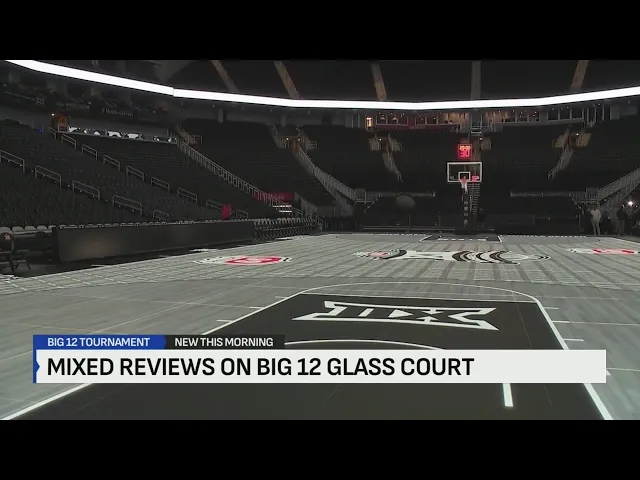
The Big 12 tournament in Kansas City debuted a full LED glass floor. The entire court is a screen. Controlled from an iPad. Team logos morph during intros. A shattered-glass animation fires after dunks. Sponsorships rotate in real time beneath the players’ feet.
It looks like the future.
It also gave a guy a migraine.
After Kansas State’s loss to BYU on Tuesday, forward Taj Manning was blunt. He called the floor slippery. Said his teammate Khamari McGriff got a migraine from the flashing lights mid-game. Called it an eyesore. Said nobody wants to play on it.
He wasn’t alone. BYU’s AJ Dybantsa — a likely top pick in this year’s NBA draft — said he liked the concept but the glass was slick. Arizona State’s Allen Mukeba said the shoes and the surface just didn’t match. Iowa State’s Killyan Toure said the flashing colors were disturbing. Kansas coach Bill Self brought his team to KC a day early just to practice on it. His review: functional, but different.
Here’s an unexpected wrinkle: McGriff — the guy who got the migraine — said he actually thought the floor was cool. He noted he gets seasonal migraines anyway. Even the refs said the spring-action frame was easier on their knees than hardwood.
Same floor. Wildly different experiences.
So will they scrap it? I don’t think so. They totally did.
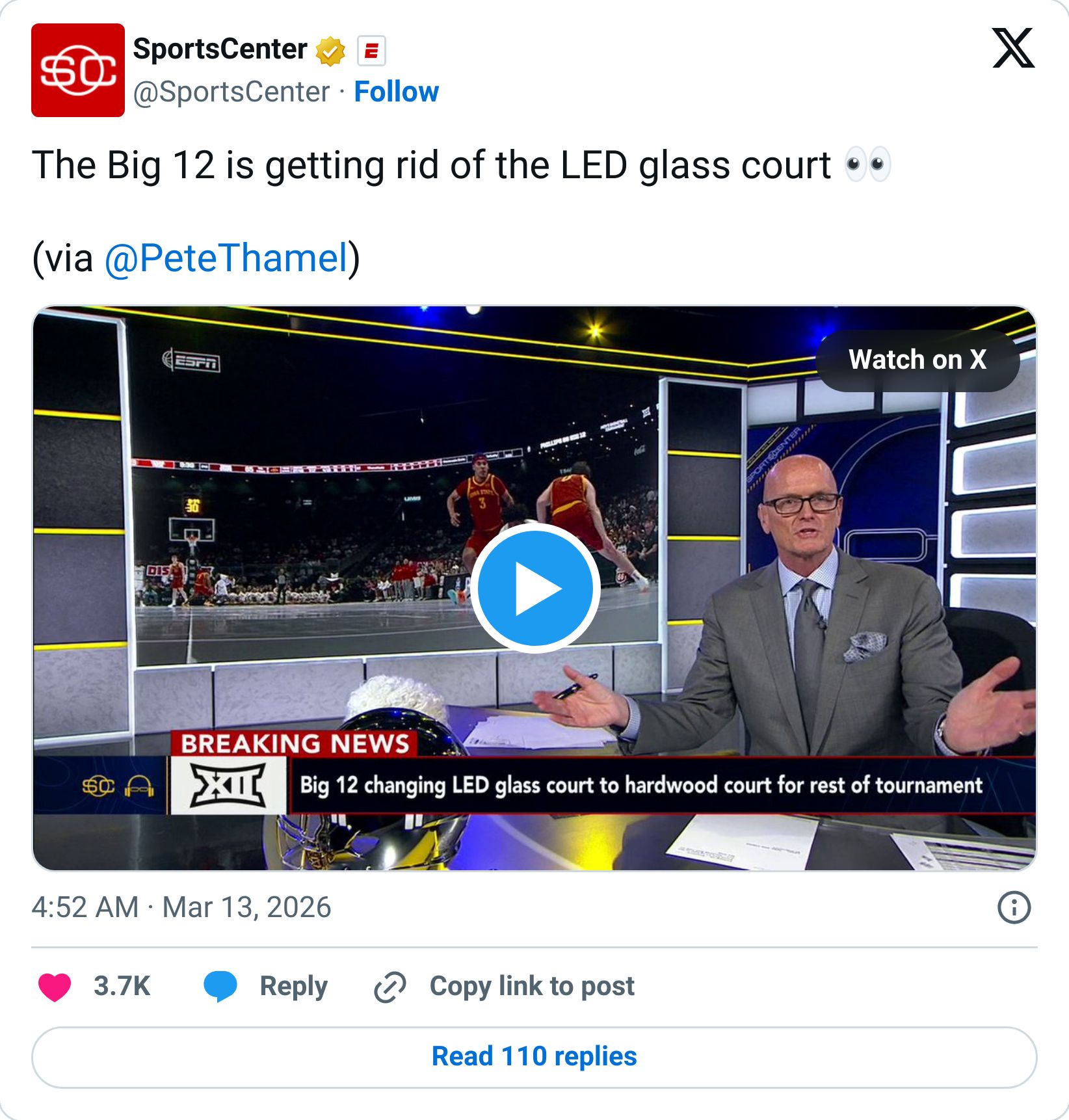
The floor was built by a German company called ASB GlassFloor. The technology has been used in Europe since 2008. The NBA All-Star Game has featured it. This was just its first sanctioned appearance in American college basketball.
Fast forward three years. Major arenas across the country will have some version of this. The economics are too obvious: dynamic sponsorships, multi-sport flexibility, broadcast-ready visuals that change on the fly. That’s not a toy. That’s a business model.
But the technology has to improve. The traction needs work. The lighting effects need to account for players sensitive to rapid visual changes. The grip coating needs another generation of refinement.
Version 1.0 always has problems. That doesn’t mean the concept is wrong.
Sound familiar?
I just got back from the Future Proof conference in Miami. And I keep hearing the same conversation: firms trying new technology — AI tools, note-taking assistants, workflow automation, new planning software — and getting mixed results. Some of it feels great. Some feels hard. Some feels like it’s giving everyone a headache.
There’s a growing awareness of what firms should be doing. But there’s a widening gap between awareness and execution. Everyone knows AI is changing how people work. Fewer people know what to do with it on a Tuesday morning.
And all along the way, there’s a gravitational pull toward the naysayers. The person who got the migraine. The advisor who tried the new CRM for a week and hated it. The ops person who says the old way was fine.
Listen to them. Respect them. Be empathetic.
But don’t let them drive.
The future isn’t binary. It’s not “this works perfectly” or “burn it down.” It’s progressive. The LED floor will get better. The AI tools will get better. The integrations will get smoother. But only if we keep playing on them.
What’s the glass floor at your firm right now? What’s the thing that’s clearly the future — but isn’t quite there yet?
Have a great weekend. Enjoy the games.
Case Study
The Rising Tide
Running through March Madness, Recapping Key Conferences and More
Jud Mackrill
March Madness is almost here.
Conference tournaments are happening this week. Sunday, the bracket drops. If you’re lucky, your team stays relevant for a week. Maybe two. If you’re really blessed, three.
This is one of the best stretches in sports. It’s also one of the worst for productivity. At previous wealthtechs and RIAs, we’d do a chili cook-off. Brackets printed. Focus is on the 5-12 match-ups and less on whatever your version of TPS reports may be.
But this week, something bigger than a bracket caught my eye.
The Big 12 tournament in Kansas City debuted a full LED glass floor. The entire court is a screen. Controlled from an iPad. Team logos morph during intros. A shattered-glass animation fires after dunks. Sponsorships rotate in real time beneath the players’ feet.
It looks like the future.
It also gave a guy a migraine.
After Kansas State’s loss to BYU on Tuesday, forward Taj Manning was blunt. He called the floor slippery. Said his teammate Khamari McGriff got a migraine from the flashing lights mid-game. Called it an eyesore. Said nobody wants to play on it.
He wasn’t alone. BYU’s AJ Dybantsa — a likely top pick in this year’s NBA draft — said he liked the concept but the glass was slick. Arizona State’s Allen Mukeba said the shoes and the surface just didn’t match. Iowa State’s Killyan Toure said the flashing colors were disturbing. Kansas coach Bill Self brought his team to KC a day early just to practice on it. His review: functional, but different.
Here’s an unexpected wrinkle: McGriff — the guy who got the migraine — said he actually thought the floor was cool. He noted he gets seasonal migraines anyway. Even the refs said the spring-action frame was easier on their knees than hardwood.
Same floor. Wildly different experiences.
So will they scrap it? I don’t think so. They totally did.
The floor was built by a German company called ASB GlassFloor. The technology has been used in Europe since 2008. The NBA All-Star Game has featured it. This was just its first sanctioned appearance in American college basketball.
Fast forward three years. Major arenas across the country will have some version of this. The economics are too obvious: dynamic sponsorships, multi-sport flexibility, broadcast-ready visuals that change on the fly. That’s not a toy. That’s a business model.
But the technology has to improve. The traction needs work. The lighting effects need to account for players sensitive to rapid visual changes. The grip coating needs another generation of refinement.
Version 1.0 always has problems. That doesn’t mean the concept is wrong.
Sound familiar?
I just got back from the Future Proof conference in Miami. And I keep hearing the same conversation: firms trying new technology — AI tools, note-taking assistants, workflow automation, new planning software — and getting mixed results. Some of it feels great. Some feels hard. Some feels like it’s giving everyone a headache.
There’s a growing awareness of what firms should be doing. But there’s a widening gap between awareness and execution. Everyone knows AI is changing how people work. Fewer people know what to do with it on a Tuesday morning.
And all along the way, there’s a gravitational pull toward the naysayers. The person who got the migraine. The advisor who tried the new CRM for a week and hated it. The ops person who says the old way was fine.
Listen to them. Respect them. Be empathetic.
But don’t let them drive.
The future isn’t binary. It’s not “this works perfectly” or “burn it down.” It’s progressive. The LED floor will get better. The AI tools will get better. The integrations will get smoother. But only if we keep playing on them.
What’s the glass floor at your firm right now? What’s the thing that’s clearly the future — but isn’t quite there yet?
Have a great weekend. Enjoy the games.


The Infrastructure for Wealth
Phone
+1 (470) 502-5600
Address
Milemarker Inc.
16192 Coastal Highway
Lewes, Delaware 19958
Built by Teams In:
Atlanta, Charleston, Cincinnati, Denver, Omaha & Portland.



Partners



Platform


Solutions
© 2026 Milemarker Inc. All rights reserved
DISCLAIMER: All product names, logos, and brands are property of their respective owners in the U.S. and other countries, and are used for identification purposes only. Use of these names, logos, and brands does not imply affiliation or endorsement.
The Infrastructure for Wealth
Phone
+1 (470) 502-5600
Address
Milemarker Inc.
16192 Coastal Highway
Lewes, Delaware 19958
Built by Teams In:
Atlanta, Charleston, Cincinnati, Denver, Omaha & Portland.
Partners
Platform
Solutions
© 2026 Milemarker Inc. All rights reserved
DISCLAIMER: All product names, logos, and brands are property of their respective owners in the U.S. and other countries, and are used for identification purposes only. Use of these names, logos, and brands does not imply affiliation or endorsement.
The Infrastructure for Wealth
Phone
+1 (470) 502-5600
Address
Milemarker Inc.
16192 Coastal Highway
Lewes, Delaware 19958
Built by Teams In:
Atlanta, Charleston, Cincinnati, Denver, Omaha & Portland.
Partners
Platform
Solutions
© 2026 Milemarker Inc. All rights reserved
DISCLAIMER: All product names, logos, and brands are property of their respective owners in the U.S. and other countries, and are used for identification purposes only. Use of these names, logos, and brands does not imply affiliation or endorsement.
Empowering Advisors
To Enjoy Every Mile.
Phone
+1 (470) 502-5600
Address
Milemarker Inc.
16192 Coastal Highway
Lewes, Delaware 19958
Built by Teams In:
Atlanta, Charleston, Cincinnati, Denver, Omaha & Portland.
Partners