
The Rising Tide
The Harada Method & The Power of Intentional Days When Building in Wealth Management
The Harada Method & The Power of Intentional Days When Building in Wealth Management
The Harada Method & The Power of Intentional Days When Building in Wealth Management
Jud Mackrill
November 24, 2025
The Los Angeles Dodgers are on a historic run — not just because they’ve stacked a roster, but because they’ve anchored their franchise to one of the most disciplined and intentional athletes of our generation: Shohei Ohtani.
You watch him and you see talent, sure — but what you’re actually seeing is architecture: a life structured on purpose.
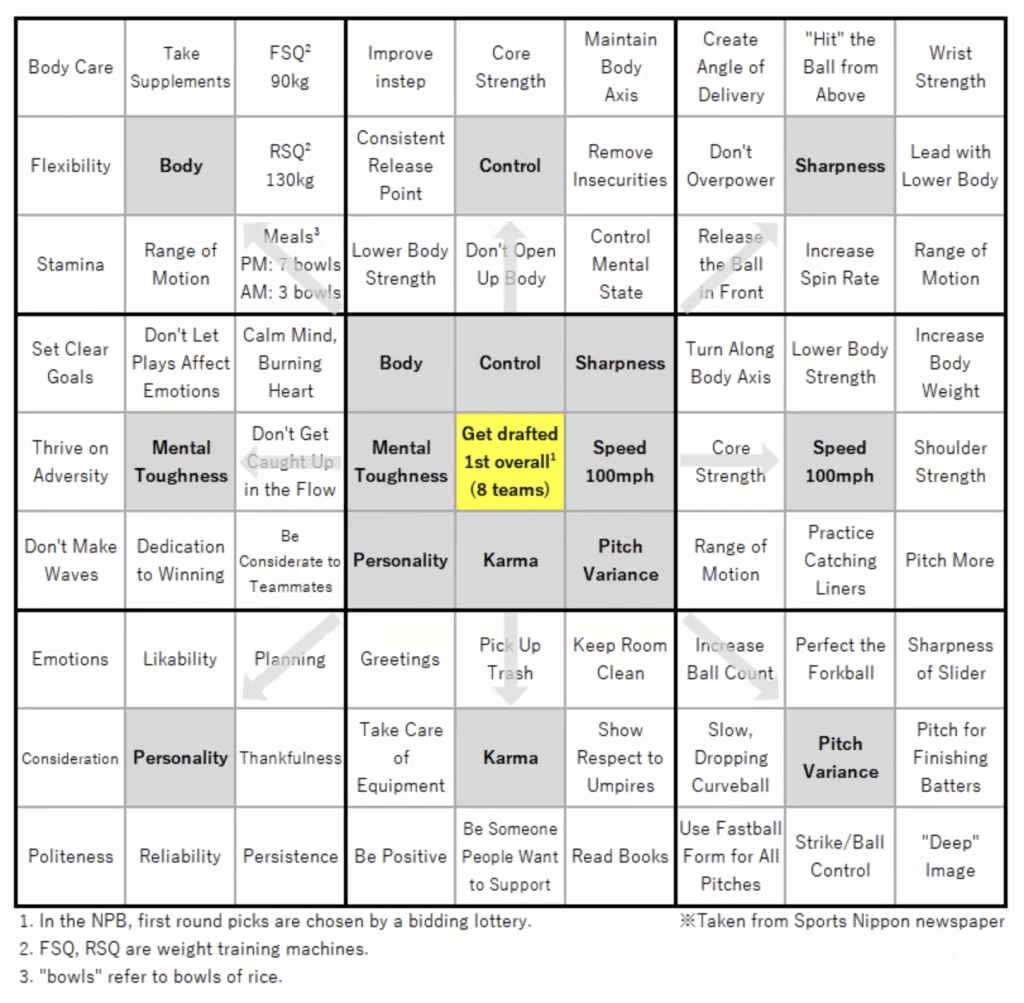
Recently, a chart resurfaced from Ohtani’s early development that revealed he wasn’t simply chasing greatness; he was planning it.
And the system he used wasn’t random. It was the Harada Method, a Japanese framework for self-reliance and goal mastery that many call “the world’s best system for developing people.”
It helped turn a teenager into the most complete baseball player we’ve ever seen.
And it gives us a blueprint for something every leader, advisor, and business needs right now:
A system for prioritization, daily discipline, and intentional growth.
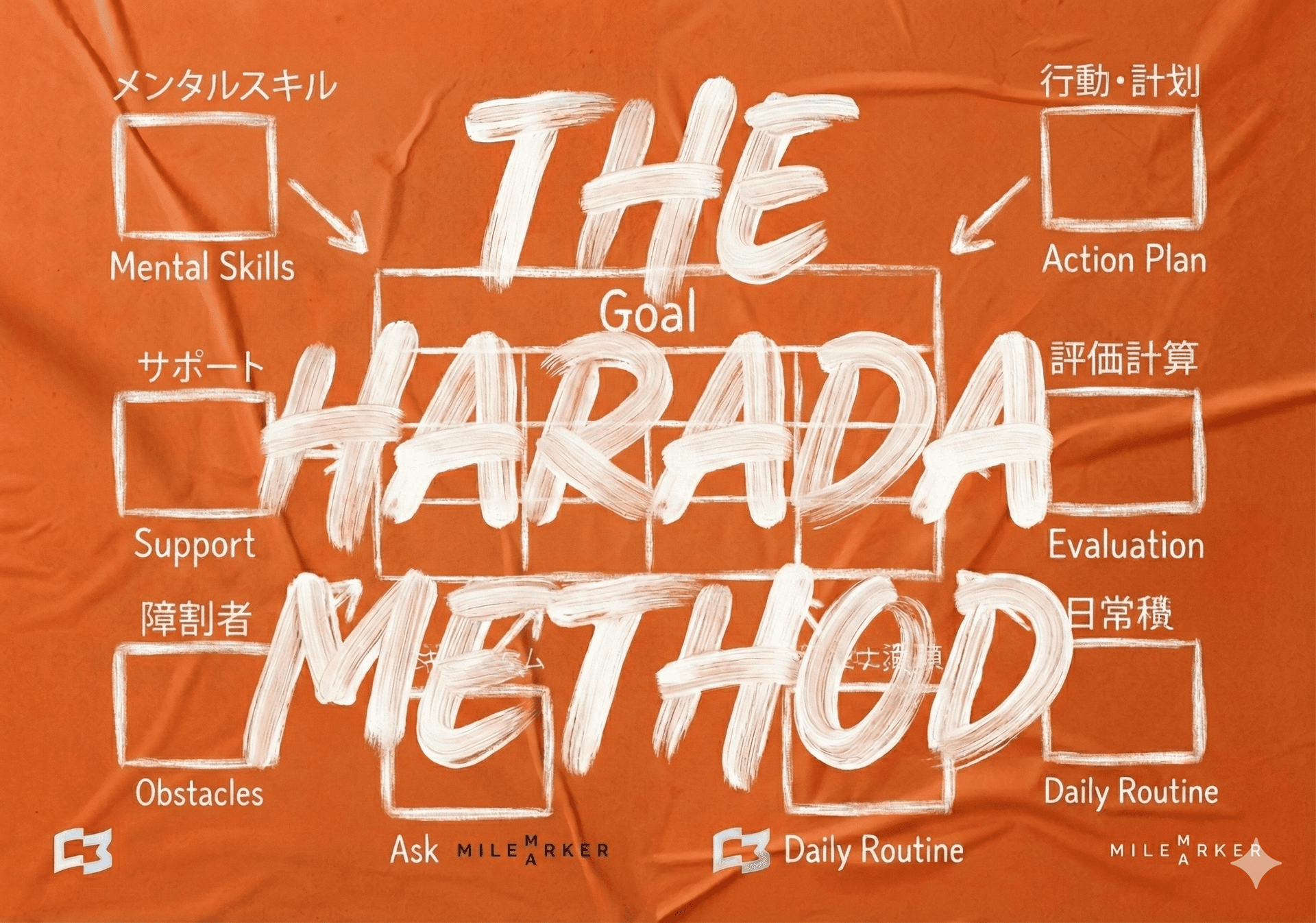
The Harada Method
Because you don’t rise to the level of your goals.
You rise to the level of your systems.
And the Harada Method can give you that system.
Why This Matters for Us (and for Wealth Management)
Most people and most teams aren’t short on vision.
They’re short on structure.
Big goals? Everyone has those.
But the daily habits?
The scaffolding?
The rhythm that makes progress consistent and predictable?
That's where we can fall short.
The Harada Method fixes that — and it translates perfectly to how we run our firms, our teams, and our own lives.
The Harada Method (Translated for Real Life & Real Business)
1. Set the One Goal
Harada is ruthless about this:
One single priority.
Not five. Not three. One.
"A person with two priorities has zero priorities."
Your world might require:
Build a data-driven advisory firm.
Reduce operational drag by 50%.
Become the top growth firm in your region.
Increase the average client size by 20% in 2026.
Pick one. Own it.
2. Envision the Ideal Future
Describe the world where the goal is achieved:
What does your firm feel like?
How do clients behave?
How does your team operate?
Who have you become as a leader?
Clarity turns into fuel.
3. Identify the Required Skills
Harada's mantra:
Don't envy excellence — reverse-engineer it.
For advisors or leaders, required skills might be:
Data literacy
Communication
Process discipline
Delegation
Decision-making
Pipeline management
Now your goal is no longer fuzzy.
It's a skill stack.
4. Build Daily Habits (The 64-Tasks Sheet)
Harada had his students break their goal into 64 micro-habits — small, repeatable actions that create compounding results.
For example:
Review the pipeline for 10 minutes.
Capture one client insight daily.
Improve one workflow weekly.
Reduce one inefficiency per day.
Review firm data every morning.
Coach one advisor weekly.
Greatness lives in tiny daily actions, not heroic bursts.
5. Anticipate Obstacles
This is signature Harada:
List every challenge upfront.
"My schedule is packed."
"Our systems are messy."
"People resist change."
"Interruptions steal my day."
Naming removes the challenge's power.
6. Identify Your Support System
Harada taught self-reliance, not isolation.
Support includes:
Your COO
Your CTO
Ops
Advisors
Milemarker
Your tech stack
Your spouse
Your routines
Your mentors
Elite performance happens inside a structure.
7. Establish Personal Standards
This is the cultural engine.
Harada's students committed to things like:
Show up early
Never complain
Always improve
Respect the process
Take ownership
For your firm:
"We are drivers, not passengers." (Our number 1 cultural value at Milemarker)
"We don't let clients guess."
"We close the loop."
"We own our numbers."
"We make progress every day."
Culture is the sum of enforced standards.
Why This Especially Matters Now
Wealth management is in a pressure cooker:
M&A consolidation
Macro uncertainty
Technology noise
Advisors overstretched
Clients expecting more
Leaders carrying more weight
Data everywhere — except where it's useful
Most firms aren't failing from lack of compounding.
They're failing from lack of intentionality.
This is no longer an industry where winging it works.
You need clarity.
Discipline.
And a repeatable system.
The Harada Method provides a very solid blueprint.
What This Looks Like Inside a Firm
Imagine every advisor, operator, and leader having:
One clear quarterly goal
Required skills identified
Daily habits documented
Obstacles listed
A support plan
Personal standards
Weekly review cycles
Now imagine your operations team matching it.
Your leadership matching it.
Your AI workflows matching it.
That's alignment.
Intentionality.
That's cultural momentum.
This is how teams become dominant.
The Truth
Shohei Ohtani isn't a miracle.
He's a byproduct of structure.
His days are engineered with intention.
His habits are trained on purpose.
And his goals are supported by disciplined systems.
Greatness — in any domain — is not spontaneous.
It's systematic.
The Harada Method is his system.
And it can be ours.
Go Giants & I hope you have a Happy Thanksgiving!
—Jud
The Rising Tide
The Harada Method & The Power of Intentional Days When Building in Wealth Management
Jud Mackrill
November 24, 2025
The Los Angeles Dodgers are on a historic run — not just because they’ve stacked a roster, but because they’ve anchored their franchise to one of the most disciplined and intentional athletes of our generation: Shohei Ohtani.
You watch him and you see talent, sure — but what you’re actually seeing is architecture: a life structured on purpose.
Recently, a chart resurfaced from Ohtani’s early development that revealed he wasn’t simply chasing greatness; he was planning it.
And the system he used wasn’t random. It was the Harada Method, a Japanese framework for self-reliance and goal mastery that many call “the world’s best system for developing people.”
It helped turn a teenager into the most complete baseball player we’ve ever seen.
And it gives us a blueprint for something every leader, advisor, and business needs right now:
A system for prioritization, daily discipline, and intentional growth.
The Harada Method
Because you don’t rise to the level of your goals.
You rise to the level of your systems.
And the Harada Method can give you that system.
Why This Matters for Us (and for Wealth Management)
Most people and most teams aren’t short on vision.
They’re short on structure.
Big goals? Everyone has those.
But the daily habits?
The scaffolding?
The rhythm that makes progress consistent and predictable?
That's where we can fall short.
The Harada Method fixes that — and it translates perfectly to how we run our firms, our teams, and our own lives.
The Harada Method (Translated for Real Life & Real Business)
1. Set the One Goal
Harada is ruthless about this:
One single priority.
Not five. Not three. One.
"A person with two priorities has zero priorities."
Your world might require:
Build a data-driven advisory firm.
Reduce operational drag by 50%.
Become the top growth firm in your region.
Increase the average client size by 20% in 2026.
Pick one. Own it.
2. Envision the Ideal Future
Describe the world where the goal is achieved:
What does your firm feel like?
How do clients behave?
How does your team operate?
Who have you become as a leader?
Clarity turns into fuel.
3. Identify the Required Skills
Harada's mantra:
Don't envy excellence — reverse-engineer it.
For advisors or leaders, required skills might be:
Data literacy
Communication
Process discipline
Delegation
Decision-making
Pipeline management
Now your goal is no longer fuzzy.
It's a skill stack.
4. Build Daily Habits (The 64-Tasks Sheet)
Harada had his students break their goal into 64 micro-habits — small, repeatable actions that create compounding results.
For example:
Review the pipeline for 10 minutes.
Capture one client insight daily.
Improve one workflow weekly.
Reduce one inefficiency per day.
Review firm data every morning.
Coach one advisor weekly.
Greatness lives in tiny daily actions, not heroic bursts.
5. Anticipate Obstacles
This is signature Harada:
List every challenge upfront.
"My schedule is packed."
"Our systems are messy."
"People resist change."
"Interruptions steal my day."
Naming removes the challenge's power.
6. Identify Your Support System
Harada taught self-reliance, not isolation.
Support includes:
Your COO
Your CTO
Ops
Advisors
Milemarker
Your tech stack
Your spouse
Your routines
Your mentors
Elite performance happens inside a structure.
7. Establish Personal Standards
This is the cultural engine.
Harada's students committed to things like:
Show up early
Never complain
Always improve
Respect the process
Take ownership
For your firm:
"We are drivers, not passengers." (Our number 1 cultural value at Milemarker)
"We don't let clients guess."
"We close the loop."
"We own our numbers."
"We make progress every day."
Culture is the sum of enforced standards.
Why This Especially Matters Now
Wealth management is in a pressure cooker:
M&A consolidation
Macro uncertainty
Technology noise
Advisors overstretched
Clients expecting more
Leaders carrying more weight
Data everywhere — except where it's useful
Most firms aren't failing from lack of compounding.
They're failing from lack of intentionality.
This is no longer an industry where winging it works.
You need clarity.
Discipline.
And a repeatable system.
The Harada Method provides a very solid blueprint.
What This Looks Like Inside a Firm
Imagine every advisor, operator, and leader having:
One clear quarterly goal
Required skills identified
Daily habits documented
Obstacles listed
A support plan
Personal standards
Weekly review cycles
Now imagine your operations team matching it.
Your leadership matching it.
Your AI workflows matching it.
That's alignment.
Intentionality.
That's cultural momentum.
This is how teams become dominant.
The Truth
Shohei Ohtani isn't a miracle.
He's a byproduct of structure.
His days are engineered with intention.
His habits are trained on purpose.
And his goals are supported by disciplined systems.
Greatness — in any domain — is not spontaneous.
It's systematic.
The Harada Method is his system.
And it can be ours.
Go Giants & I hope you have a Happy Thanksgiving!
—Jud


EMPOWERING ADVISORS TO ENJOY EVERY MILE.
Mailing Address
Milemarker
PO Box 262
Isle Of Palms, SC 29451-9998
lEGAL ADDRESS
Milemarker Inc.
16192 Coastal Highway
Lewes, Delaware 19958
Built by Teams In:
Atlanta, Charleston, Cincinnati, Denver, Los Angeles, Omaha & Portland.



PARTNERS



Platform


SOLUTIONS
© 2026 Milemarker Inc. All rights reserved
DISCLAIMER: All product names, logos, and brands are property of their respective owners in the U.S. and other countries, and are used for identification purposes only. Use of these names, logos, and brands does not imply affiliation or endorsement.
EMPOWERING ADVISORS TO ENJOY EVERY MILE.
Mailing Address
Milemarker
PO Box 262
Isle Of Palms, SC 29451-9998
lEGAL ADDRESS
Milemarker Inc.
16192 Coastal Highway
Lewes, Delaware 19958
Built by Teams In:
Atlanta, Charleston, Cincinnati, Denver, Los Angeles, Omaha & Portland.
PARTNERS
Platform
SOLUTIONS
© 2026 Milemarker Inc. All rights reserved
DISCLAIMER: All product names, logos, and brands are property of their respective owners in the U.S. and other countries, and are used for identification purposes only. Use of these names, logos, and brands does not imply affiliation or endorsement.
EMPOWERING ADVISORS TO ENJOY EVERY MILE.
Mailing Address
Milemarker
PO Box 262
Isle Of Palms, SC 29451-9998
lEGAL ADDRESS
Milemarker Inc.
16192 Coastal Highway
Lewes, Delaware 19958
Built by Teams In:
Atlanta, Charleston, Cincinnati, Denver, Los Angeles, Omaha & Portland.
PARTNERS
Platform
SOLUTIONS
© 2026 Milemarker Inc. All rights reserved
DISCLAIMER: All product names, logos, and brands are property of their respective owners in the U.S. and other countries, and are used for identification purposes only. Use of these names, logos, and brands does not imply affiliation or endorsement.
EMPOWERING ADVISORS TO ENJOY EVERY MILE.
Mailing Address
Milemarker
PO Box 262
Isle Of Palms, SC 29451-9998
lEGAL ADDRESS
Milemarker Inc.
16192 Coastal Highway
Lewes, Delaware 19958
Built by Teams In:
Atlanta, Charleston, Cincinnati, Denver, Los Angeles, Omaha & Portland.
PARTNERS
Platform
SOLUTIONS
© 2026 Milemarker Inc. All rights reserved
DISCLAIMER: All product names, logos, and brands are property of their respective owners in the U.S. and other countries, and are used for identification purposes only. Use of these names, logos, and brands does not imply affiliation or endorsement.